
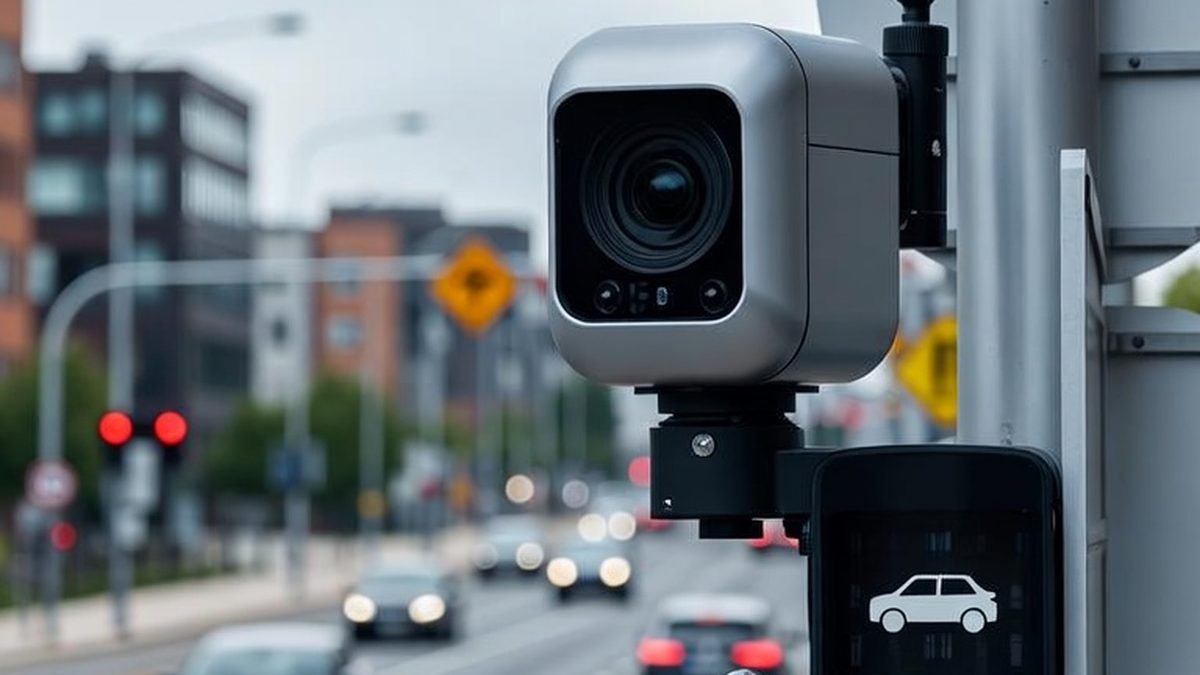
Modern vehicular surveillance operates through three primary technologies: GPS tracking devices, Automated Licence Plate Reader (ALPR/LPR) systems, and to a lesser extent RFID-based systems. Each operates differently, has a distinct legal framework, and requires different countermeasures. This article covers each in turn, drawing from public law enforcement documentation, published research, and court records.
GPS Tracking Devices
A GPS tracker is a battery-powered or hardwired device — typically the size of a matchbox to a deck of cards — that records a vehicle's geographic position at regular intervals and transmits that data to a remote receiver via cellular network. Law enforcement versions and commercial covert trackers are both available; the former require court authorisation in most jurisdictions, while the latter are used in vehicle recovery, fleet management, and, increasingly, domestic surveillance contexts.
Physical characteristics. Law enforcement GPS trackers are commonly attached magnetically to the undercarriage of a vehicle, typically at the frame near axles, inside wheel wells, or beneath bumpers — locations offering protection from rain and debris while remaining accessible for removal and recharging.
Legal framework. In United States v. Jones (2012), the U.S. Supreme Court unanimously held that placing a GPS tracker on a vehicle and monitoring its movements for 28 days constitutes a Fourth Amendment search. This overturned earlier circuit court decisions that had treated location monitoring as non-private activity conducted in public. Most states require a warrant for law enforcement GPS installation, though private placement by non-law enforcement actors falls into inconsistent legal territory.
Detection. Physical inspection of common attachment points — particularly underneath the vehicle with a flashlight and mirror — remains the primary detection method. Electronic detection devices (RF sweepers tuned to cellular transmission frequencies) can identify active trackers when they are transmitting. The Surveillance Countermeasures guide details specific detection procedures and known tracker profiles.
Automated Licence Plate Readers (ALPR/LPR)
ALPR systems are camera arrays, typically mounted on police vehicles, fixed gantries, or toll infrastructure, that automatically photograph vehicle number plates and run them through law enforcement databases in real time. Using optical character recognition, a modern system can process hundreds of plates per minute.
Scale of deployment. ALPR technology is now deployed by thousands of law enforcement agencies across North America, as well as by private companies that sell database access to insurers, repossession agencies, and others. Flock Safety, one of the largest private providers, operates a nationwide network with data accessible to law enforcement through subscription agreements. A 2024 appellate case in Virginia confirmed that accessing ALPR data from a public roadway does not, in most configurations, require a warrant — though a 2024 Norfolk Circuit Court ruling found warrantless access constituted a Fourth Amendment violation in specific fact patterns.
What ALPR databases store. Beyond the plate number itself, ALPR records typically include: timestamp, GPS coordinates of the reader, direction of travel, vehicle make and colour (via associated registration data), and the number of times a plate has been seen in the database. Private operators retain this data for extended periods — Flock's standard retention was 30 days as of recent reporting, though this varies.
Aggregate surveillance concern. The EFF and ACLU have consistently documented that ALPR systems, by building location histories across multiple reads, create a pattern-of-life record functionally equivalent to GPS tracking — but without the Fourth Amendment protections the Jones decision established for active tracking devices.
RFID in Vehicle Surveillance
Radio Frequency Identification (RFID) technology in vehicular contexts primarily appears in toll transponders (E-ZPass, SunPass, etc.) and in some commercial vehicle tracking systems. Toll transponder data constitutes a location record: each transponder read logs vehicle identity, location, and time. This data has been produced in law enforcement investigations under subpoena and FOIA-disclosed records have confirmed its use in criminal cases.
Active RFID systems used in fleet management operate on similar principles to GPS trackers but use shorter-range radio frequencies rather than satellite positioning. These are common in commercial logistics, construction equipment tracking, and rental vehicle fleets.
Integrated Surveillance Architecture
The practical surveillance picture for a vehicle is the combination of these systems: a GPS tracker provides continuous high-precision location data; ALPR records provide checkpoint sightings across a city or highway network; toll transponder records add fixed-point data at bridge and highway entries; and cellular location data from the driver's phone provides an additional corroborating layer.
Understanding this architecture — rather than focusing on any single technology — is the starting point for meaningful counter-surveillance. The Surveillance Countermeasures guide addresses each layer and its countermeasures in operational detail.